

Saving a Shipment
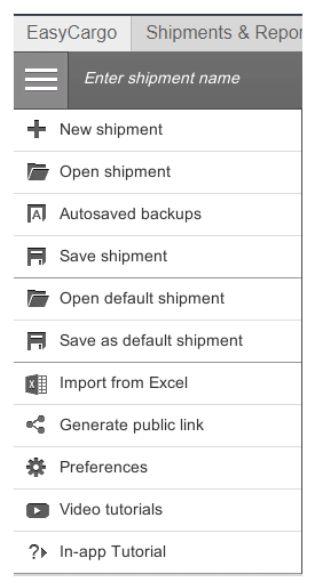
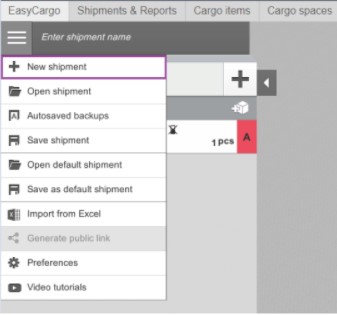
Above the inserted items in the left-hand side panel, you can enter the shipment name. Just click here and fill in the name. By clicking on the 3 horizontal lines next to it on the left, you can expand the menu related to the shipment. Here, you can Save shipment, open another one, or start a new shipment.
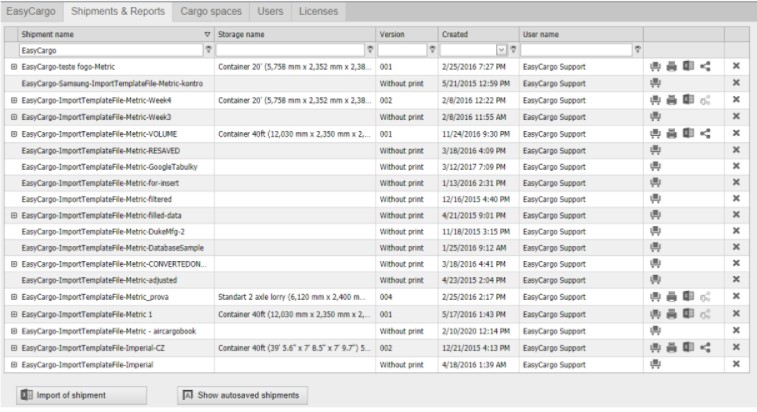
The application saves shipment input data for the current shipment plan automatically every 2 minutes while you are active in EasyCargo. You can find automatically saved shipments under Autosaved backups. Currently, EasyCargo only remembers the 10 most recent automatically saved shipments. Autosaved backups are only available for you to see and access, while shipments you manually save are accessible to other administrators under your user account. You can get to Autosaved backups from the tab Shipments & Reports:

From the previously mentioned menu on the load planning screen under the EasyCargo tab, you can save a shipment by clicking Save as default shipment. Such a shipment will be automatically loaded at startup as a template for the new shipment. The default shipment can be easily reset by creating a New shipment and saving it as the default one.
All saved shipments are stored under the tab Shipments & Reports. The number of saved shipments is not limited. However, each shipment can have 999 versions at maximum, so it is recommended to insert a new name for every new shipment.
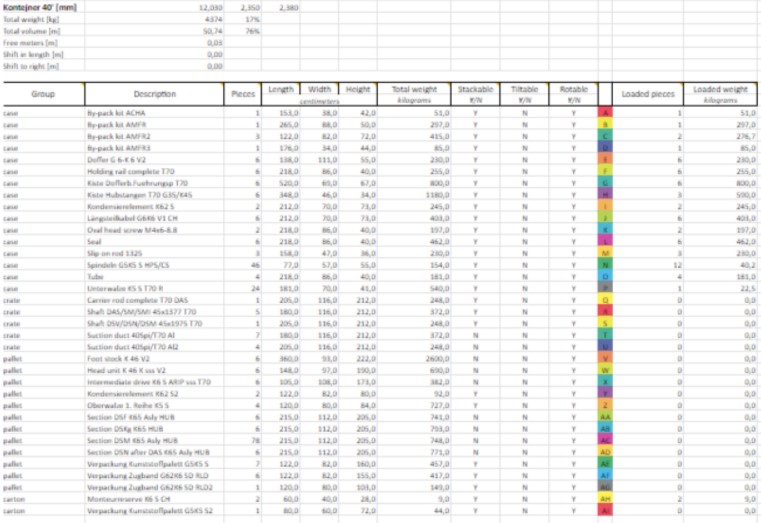
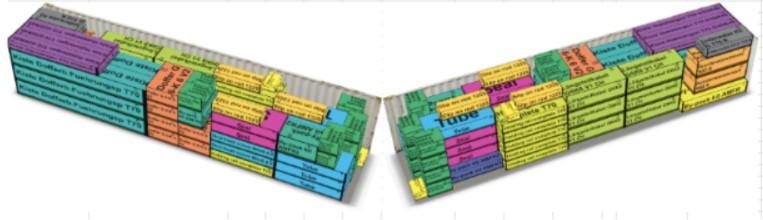
The exported data can also be used to be imported again. See the chapter Import from Excel.
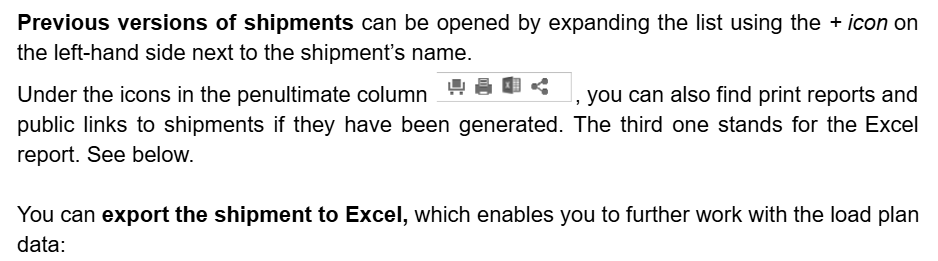
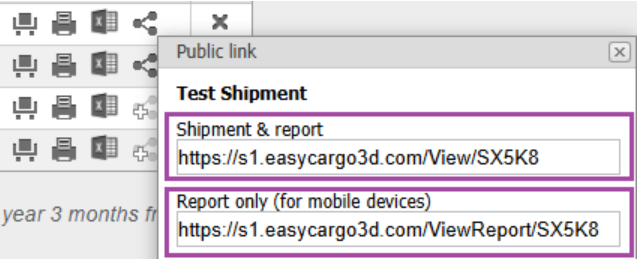
When it comes to the public links (the fourth option), you can use the one that leads to Shipments & Reports. This allows you to display the shipment in 3D, including the report. The alternative is to use the one named Report only to display the report. This report can be suitable for mobile devices.
If you want to start a completely new shipment, go to the load planning screen under the EasyCargo tab, and click on the three lines in the upper left part of the screen next to the shipment name. Here, you will find the option: New shipment:
Note: When deleting a shipment, it is crucial to distinguish between deleting a particular version only (marked in green below) and deleting all shipment versions (marked in red)!

For more information, you can watch videos about managing saved loads and videos about sharing loads via PDF report, via public link, or via Excel.